Inambakan Falls
A Journey into Ginatilan’s Hidden Blue Heart
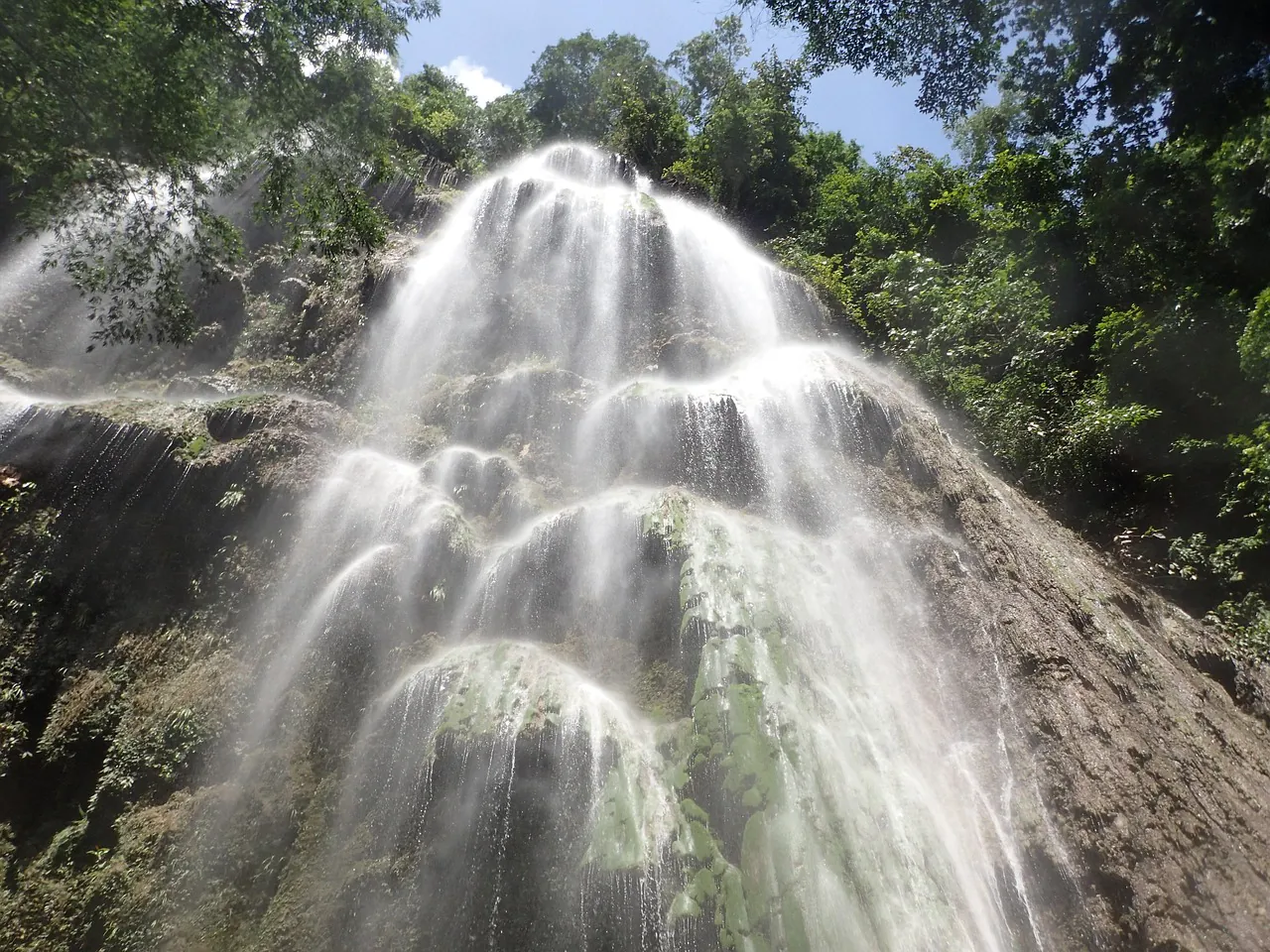
Ginatilan holds a secret. Tucked away in the rugged southern highlands of Cebu, Inambakan Falls waits for those willing to venture beyond the usual tourist trails. The name itself sets the stakes. Derived from the Cebuano word ambak, meaning “to jump,” this cascading giant commands absolute respect.
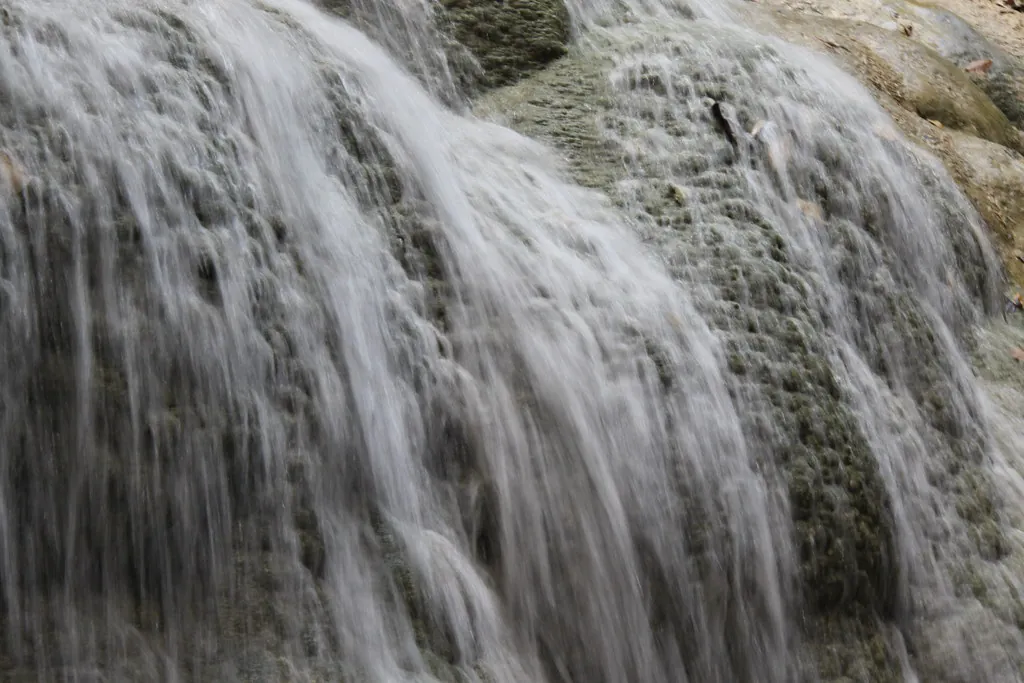
The main event hits you immediately upon arrival. Level 1 features a spectacular 100-foot drop where raw hydraulic power carves into the ancient limestone. The resulting plunge pool glows an impossible, milky-blue hue—a signature trait of South Cebu’s mineral-rich river systems. While Kawasan draws the massive international crowds, Inambakan offers that same vibrant azure water without the elbow-to-elbow chaos.
Scaling the Multi-Level Masterpiece
The 100-foot main cascade only scratches the surface. The river fractures into five distinct waterfall levels, each offering a unique rhythm. Casual swimmers usually drop their dry bags at the base and float in the sprawling main pool. Mid-level adventurers scale the steep, root-choked trails to find quieter, turquoise basins higher up the mountain. If you want to conquer the entire gorge, consult our comprehensive Multi-Level Cascade Guide before lacing up your water shoes.
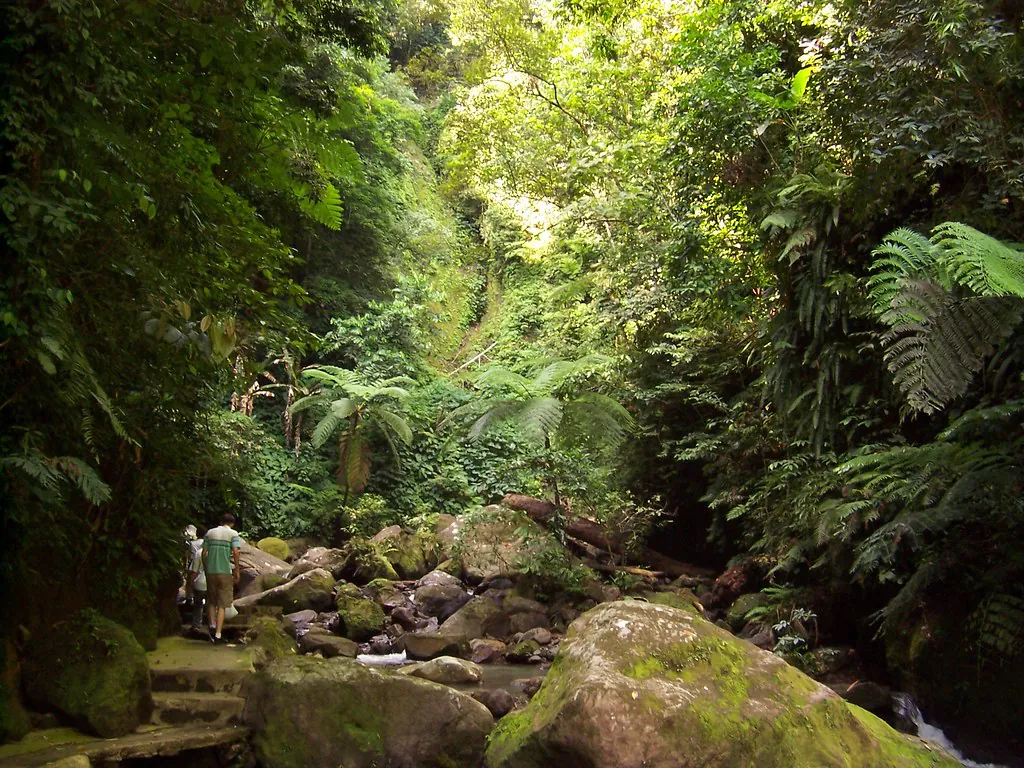
“The dense canopy of mahogany trees and giant ferns provide deep shade against the tropical heat, turning a simple hike into a prehistoric expedition.”
Where exactly is this place? You will find the trailhead in Barangay Calabawan, a quiet village perched above the municipality of Ginatilan. Situated roughly 140 kilometers southwest of Cebu City, the drive takes about 3.5 to 4.5 hours depending on coastal traffic. If you base yourself in Oslob or Moalboal, the distances shrink dramatically to 33 kilometers and 52 kilometers, respectively. Whether you rent a scooter, flag down a local habal-habal (motorcycle taxi), or catch a yellow Ceres bus down the highway, getting here requires deliberate planning. We outline the exact bus routes and terminal transfers in our guide on How to get to Inambakan Falls. The Cebu Provincial Government recently improved many southern arterial roads, making the final mountain stretch a surprisingly smooth ride.
The Jungle Trek & Logistics
The jungle trek sets the mood perfectly. After leaving the parking lot, a scenic 5-to-10-minute descent down paved concrete stairs leads straight to the roaring main falls. It takes about an hour or two to hike all five levels round-trip, depending on how often you stop to swim.
Entrance & Fees
- Admission: 50 PHP per person
- Motorcycle Parking: 10 PHP
- Car/Van Parking: 30 PHP
- Details: Tickets & Tours
Operating Hours
- Schedule: 6:00 AM – 5:00 PM Daily
- Best Time: Early morning
- Seasons: Dry vs. Wet Season
Essential Gear
- Water shoes with aggressive grip
- Waterproof dry bag
- Small PHP bills for tips
Hiring a local guide isn’t strictly mandatory for lounging at the main pool, but traversing the upper tiers safely definitely requires their expertise. Tipping these guides sustains the village economy. Swimming in the opaque water is the primary draw, and cliff jumping remains a popular adrenaline rush. Always wear the life vests provided on-site and familiarize yourself with our Visitor Rules & Guidelines before taking the plunge.
Experience South Cebu

Cebu Tumalog, Inambakan Falls, Sardines and Whaleshark Watching
⭐ Cebu Experience
🔥 Recommended for high-season travel
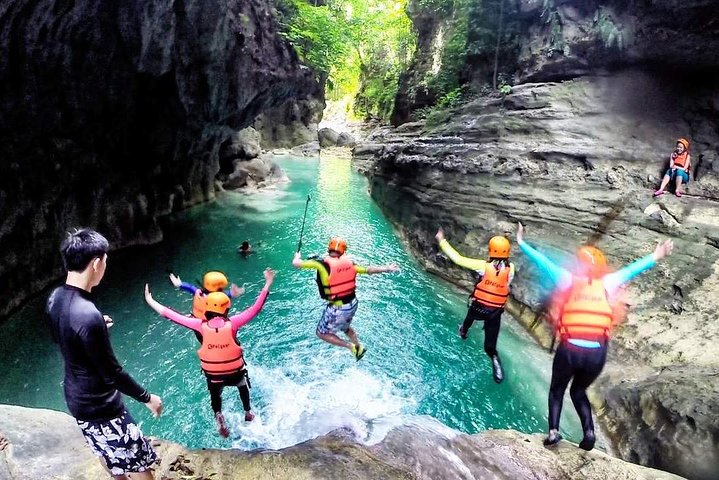
Cebu: Oslob Whale Shark Swimming and Kawasan Falls Canyoneering
⭐ Cebu: Experience
🔥 Likely to sell out soon!

Whale Shark & Tumalog Falls & Sumilon Sandbar & Pescador Island with Sardines
⭐ Whale Experience
🔥 Booked 2 times today

Oslob Whale Sharks and Moalboal Sardine Run, Sea Turtles Tour
⭐ Oslob Experience
🔥 Professional local guide included
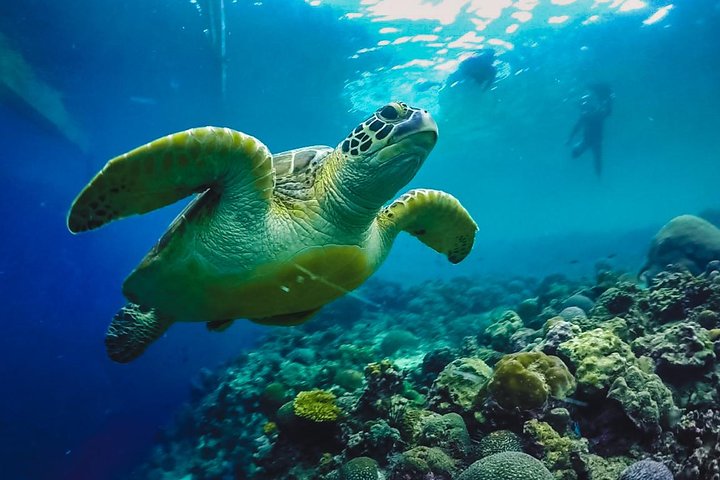
Cebu: Moalboal Sardines, Turtle Snorkeling & Kawasan Canyoneering
⭐ Cebu: Experience
🔥 Booked 11 times today

Osmeña Peak & Badian Canyoneering with Kawasan Falls Tour Package
⭐ Osmeña Experience
🔥 Instant confirmation after booking
Frequently Asked Questions
Do I need a guide?
You do not need a guide if you plan to stay at Level 1 (the main pool). If you wish to hike up to levels 2 through 5, a local guide is highly recommended to navigate the slippery rocks and assess safe water depths.
Is the water really that blue?
Yes. The distinct, opaque azure color is completely natural. It is caused by dissolved limestone particles suspended in the river water reflecting sunlight.
Is Inambakan Falls family-friendly?
The 5-to-10-minute paved walk from the parking area to the main pool is manageable for older children and active adults. The upper hikes, which involve scrambling over roots and wading through currents, are best reserved for fit teenagers and adults.
Skip the overcrowded tourist traps. Inambakan rewards those who chase the remote, the rugged, and the breathtaking. It is a testament to the raw beauty of the Philippines, waiting patiently at the end of a long mountain road.